Sunday, February 26, 2017

Video "BlackJack"

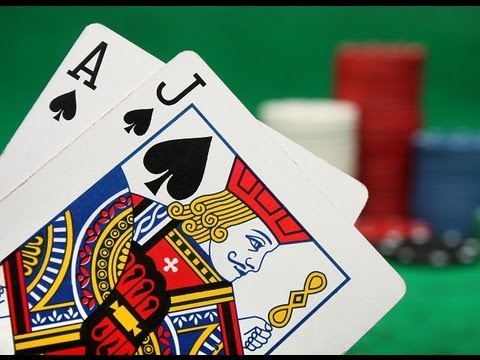
Have you played one of these:

Have you noticed that something is "not quite right"? Yes. Well I'm about to show you why this Blackjack game is not really Blackjack. Let me explain. In order to understand what I'm about to point out you need to understand a few things:

Blackjack is not simply the rules of the game. Just because you have "decks" of cards doesn't mean you have Blackjack. You have something that looks like blackjack. Blackjack was made for play using physical cards and NOT a random number generator (RNG). Physical cards have certain properties that cannot be changed. They have a thickness and material that sometimes sticks together. I won't go into dealer errors. Not only that but dealing and shuffling of the deck or shoe happens in a certain way.

For example I've watched a dealer shuffle. Here's how it went:

1)The decks are put into a shuffling machine usually referred to as an autoshuffler.
2)A cut card is placed halfway down the deck.
3)The two halves are separated and reversed front to back.
4)The cut card is then placed about 3/4 the way into the deck (also known as penetration).
5)A card is removed from the top of the deck and "burned".
6)The deck is placed in the shoe and the game begins. Note that once the deck is placed in the shoe there is NO OTHER SHUFFLING happening.

Whatever order the cards have, they have until the next shuffle regardless of how many people are playing or when a person enters and leaves the game.

If you've seen my last set of posts you know that there is a particular statistical pattern that will emerge. This is predictable and can be used to "beat" the game so long as you play perfect basic strategy AND use proper bankroll management. Now lets see what it is that these "Blackjack" machines actually do. Please note that I am about to quote the NYS Gambling laws. This differs from other state laws and therefore may not apply where you live. I strongly advise that you find and read the laws governing video games before you put "real" money down.

§ 5319.35. RNG requirements. The selection of game symbols or production of game outcomes for a gaming device using a RNG shall: (a) be statistically independent;
1093 updated (2/17)
(b) conform to the desired random distribution;
(c) pass various recognized statistical tests; and
(d) be unpredictable.
I wish to draw the reader's attention to items a, c and d. Why? Because actual Blackjack is actually predictable and does not "pass various recognized statistical tests". Tell me, have you seen an actual shoe undergo "statistical tests"? No? I thought not. So already we see that video "Blackjack" is not really Blackjack. but it goes further.
An independent testing laboratory approved by the commission may employ the use of various recognized tests to determine whether or not the random values produced by the random number generator pass the desired confidence level of 99 percent. Such independent testing laboratory may choose the appropriate tests on a case-by-case basis depending on the RNG under review. Such tests may include, without limitation:
(a) chi-square test;
(b) equi-distribution (frequency) test;
(c) gap test;
(d) overlaps test;
(e) poker test;
(f) coupon collector’s test;
(g) permutation test;
(h) Kolmogorov-Smirnov test;
(i) adjacencycriteriontests;
(j) order statistic test;
(k) runs tests (patterns of occurrences should not be recurrent);
(l) interplaycorrelationtest;
(m) serial correlation test potency and degree of serial correlation (outcomes should be independent of the previous game);
(n) tests on subsequences; and
(o) Poisson distribution.
[My underlines]
As I have shown in previous posts, in actual BlackJack not only are patterns of occurrences present but are NOT independent of the previous game (where a "game" is any hand). SO lets review:

Video blackjack such as that shown above is specifically programed to eliminate predictability and outcomes that are dependent upon previous hands. That is NOT Blackjack because Blackjack has these two things. But wait, there is more:

§ 5319.37. Background RNG activity requirement. A RNG shall be cycled continuously in the background between games and during game play at a speed that cannot be timed by the player.
It's bad enough that we're using a RNG (which of course has to happen for there to be a "shuffled" deck but unlike an actual deck in which there is no randomization of ANYTHING until an actual physical shuffle occurs, this RNG is constantly in operation. Think about it. Once a Deck hits a shoe the cards are set until shuffle, According to this document, the RNG which actually "picks" the card is constantly running. That is not Blackjack.

The first seed shall be determined randomly by an uncontrolled event. After every game there shall be a random change in the RNG process (new seed, random timer, delay, etc.) in order to ensure that the RNG does not start at the same value every time. It is permissible not to use a random seed. Nevertheless, a manufacturer shall ensure that multiple games will not synchronize.[My underlines]
. Really? I don't know how many people playing a physical shoe have noticed that a shoe was identical but I've never noticed it but lets assume it does happen. Why is a manufacturer required to make sure that something that is possible cannot happen?
§ 5319.39. Live game correlation. Where a gaming device plays a game that is recognizable to be a simulation of a live casino game, such as poker, blackjack, roulette, etc., the same probabilities associated with the live game shall be evident in the simulated game, unless otherwise denoted on the display or help screen.
This is misleading. Number one "same probabilities" doesn't mean what you think it does why? because as quoted above, the games are specifically programmed to avoid predictability and patterns of occurrences influenced by previous games. Again though I have already shown in previous posts that Blackjack by definition is predictable and hands (games) are directly influenced by the hands that preceded them.

Lets look at some other legal requirements:

§ 5319.45. Software requirements for percentage payout.

(b) Gaming devices that may be affected by player skill shall meet the requirement of this section when using a method of play that will provide the greatest return to the player over a period of continuous play.

"...a method of play...". Unless we're talking side bets and IF we're talking side bets....

(c) RNG. Each RNG shall meet the requirements set forth in section 5319.35 of this Part and the following requirements:

(1) In the game selection process:
(i) each possible permutation or combination of game elements that produces winning or losing game outcomes shall be available for random selection at the initiation of each play, unless otherwise denoted by the game;

Again, we know that in a shuffled deck there is no 'randomization" of card picks. That is, the dealer cannot close his or her eyes and pick a card from anywhere in the shoe. No, the shoe was determined at shuffle. There is nothing else to do but pull the cards. It may seem "random" to the player, but the cards are actually set already. You need to understand this. There should be no randomization going on once a deck is created.

Let us also be clear if you have been playing the game pictured above and have been wondering why, for example, you have these long winning and losing streaks. Or if you have noticed that even though certain events happen at a certain frequency almost *all the time*. Or if you have noticed that playing these differs strongly from what you see at a live dealer, you are not imagining things.

Ask yourself the following: The sign says "random shuffle" but have you EVER been notified of a shuffle? No? Why not? If this is supposed to simulate an actual Blackjack game, you should at least be notified that a shuffle has happened. Oh it's when the avatar changes? Really? Did they tell you that? You do know that at a casino a dealer can rotate out between shuffles right?

Say what about penetration. Do those signs ever tell you about penetration? Did you see anything in the NYS Gambling commission about notifying the player about how much of this "random" deck is being used in each game? No? Any real Blackjack player knows that the penetration has an immense affect on the game. You'll note that the laws only require a random deck. It says NOTHING about how much of the deck has to be used. It says nothing in regards to whether the deck has to be the same penetration after every "shuffle" (whenever that is).

[Update] looking over my data for the past few months and comparing it to physical games, I estimate that the penetration on these game ranges from 1/3 to 1/2. Since I have seen no laws regarding notifying the user of penetration (something you can see at a physical game) or of having a set penetration you should assume that the casino can legally change the penetration (or randomize it) in order to increase the house advantage. This statement assumes that a "shuffle" occurs at every avatar change.

[/update] It's not that these companies cannot program such notices. It's not that they cannot show you a cut card and a burn card. It's that it is to the benefit of the casino that they do not.

Now a note about those "continuous shuffle" Interblock games. If you've played against an physical continuous shuffler and researched the mechanism, you know that a continuous shuffler really isn't. It holds cards in something like a 16 card "slot". As each card is used and returned to the deck, it is randomly assigned to a slot. Obviously "full" slots cannot be used. In other words, although the shuffle is continuous, it is not exactly random. For this reason, even physical continuous shufflers can be mathematically mapped for optimum winning play. However these IB games with continuous shuffles have to adhere to the rules laid down by the laws governing gaming. As shown above they do their best to be random and non-recurring and not influenced by previous hands. Again, something that is impossible to do with physical cards and a physical continuous shuffler.

So to close, I want to be clear. I'm not accusing casinos of cheating. Nor am I accusing the manufacturers of cheating. They are offering games under specific rules and laws. They are using computers that are running specific code. You take that risk as a part of "gambling". My only purpose here is to inform the player of what game they are actually playing. IMO these "blackjack" games are specialized slot machines. It is in your best interest to hit and run these machines and stack short term winnings if you are looking to make real money. It would be better to attack a real physical card game where non-randomness and predictability is part and parcel of the game.

Monday, December 19, 2016

Blackjack 3rd “loss” Analysis

So in the previous post I showed the frequency of different win-loss-pushes in a row. I demonstrated that there is a 50% drop in likelihood of a 2nd loss in a row and then another 50% drop in likelihood of a 3rd loss and another 50% drop by the 4th loss. After that the chart levels out with any further loss in a row being equally [un] likely. It also demonstrated that it is a bad idea to keep escalating bets beyond 4 due to this because though it is unlikely that one would lose again, at that end of the scale winning and losing are about equal likelihood (aka: no real advantage).

So the chart shows that the optimal inflection point is between the 3rd and 4th loss. So again used two programs to determine how frequently one hits on the 3rd try (after 2 losses in a row). Same rules applied:

Basic Strategy, no deviations.
6 decks
4 shoes

So since the charts got kinda messed up, the first bar is wins on "3rd try" (just had 2 losses in a row) the second bar is you just lost your 3rd hand in a row and the last bar (3) is you got pushed.

The reason I have 2 charts per app is because I was surprised by the difference between Mobilityware and BJAT. These two apps must be using different algorithms to get their "randomness". I will say that I have found MW to be somewhat streaky. Assuming BJAT to be more accurate you can see that on the second pass it "conformed" to the expectations. It is possible that the first run was an example of negative deviation and indeed I was cash negative for most of that run (was also up 12% at one point and I would have cashed out).

In the charts we can see that the win percentage on BJ Apprentice trainer falls on the low side of wins at 44.7 and 48.27% wins respectively. Admittedly I thought that to be pretty low given the previous charts. I cannot say how this would actually play out but you would “break even” in a give and take situation (assumings your gives aren’t doubles). If you’re fortunate, with a few BJ and doubles on your high bet you can come out far ahead.

Mobilityware showed a far more favorable win rate for the player with 57.14% and 57.8% win rate. This is a SERIOUS advantage and if it played out like that in a casino, one could expect to make a lot of money as that is way beyond the casino advantage.

The average between these two is 51.97% (52%) which is still an advantage over the casino.

Now I have not had practice play that resembled anything I saw at the casino. Some better, some worse, which I guess is about right so take these stats with the appropriate grains of salt and remember these stats are for short term play, I have no idea and have no intentions on how this would work out long term.

Friday, December 16, 2016

BlackJack Win-Loss-Push In A Row Stats

When you are not counting cards you are faced with a situation where you need to use some kind of sound statistical model to win money. Even when you are counting cards you are using a statistical model to approximate your chance of winning. As you may or may not know just because the odds are in your favor of winning a particular hand, doesn’t mean that you will actually win them.

I’ve recently acquired the skill of card counting and proceeded to have the longest string of losses than I ever had. The primary reason for this is that I did not understand that at high counts not only are YOUR odds high of getting “pat hands” and “blackjack” increased but so are the odds of the DEALER getting pat hands and blackjacks AND PUSHES.

So I had to go back to the drawing board. One thing I stopped doing as my earnings increased was “grabbing my winnings” when they were there. That is, I no longer was satisfied with a $50-$100 win for a session ($500 bank). I thought I should and could extend these sessions. It seemed to work that way in practice but at the table, ahhh..no.

Also I looked back at what I did when I did not understand or was able of counting. I ran (and still do) progressions. As indicated in a previous post, running progressions, particularly negative one can deplete your bank very quickly. However there are sound reasonings for why people do run progressions and make money off them in the short term.

Let me emphasize that I am talking short term. I read about players sitting for 20 hours or so. I don’t know how much bank they start with but I have NEVER sat at a BlackJack table for more than 6 hours total. I can barely go an hour before I have to pee. So what follows are relevant win-loss push stats that may be useful for those who cannot count but want to use some sort of statistical model for their betting.

Below you will find two charts. These charts are the results of playing 4 consecutive 6 deck shoes with cut card and dealer hitting on soft 17 while playing basic strategy with NO deviations. Essentially a no counting amateur who managed to memorize or follow BS.

Chart 1 shows the results playing MobilityWare BlackJack 5.5.1 on iPhone IOS 10.2. Chart 2 shows the results playing BlackJack Apprentice Trainer same platform.

What you are seeing are how often “back to back” events occur. Double downs are not considered two hands though one would want to consider the potential monetary impact of a double down loss. Successful splits are counted as double wins. Double loss splits are considered 2 losses in a row and a split split is considered a single loss and single win.

You’ll note that with both apps the odds of winning or losing two hands in a row is around 50%. That is if you’ve lost the first hand the chance of losing the second hand is 50%. You’ll note that winning or losing the third hand halves again the chances. Note that there is a leveling off beginning at 4 hands. There is very little statistical change between win and loss 4 and 8 in a row. This is why if you are playing strictly on win-loss statistics and using a negative progression it is in your interest to stop the bleeding at 4x. At 5x and beyond though the likelihood of losing again is low one has already entered the “damn near impossible” realm and anything goes ( and I have the losses to prove it).

So what does this mean to the basic strategy player with small bank? Well in my opinion, particularly for people playing with small bank (1k and under) you should use the 10-20% rule. When you are up 10-20% of your buy in, bail the table at the next loss and cash out your winnings. Then sit back down and go for another session and repeat. Why do I say this? Well while making these charts I flat betted and was up 100 to 150 on each game and then lost the majority of the winnings. In some cases falling into losing territory (usually on high counts shrug). So there IS money to be made even when flat betting but due to averaging out, the wins that generate that money is going to get wiped out by corresponding losses, you can see that in the chart, there are approximately the same number of wins and losses but losses OUTSTRIP wins in the long term even in this 4 shoe sample. So rather than hand back your winnings to the casino (which you’ll call “leveraging winnings”) cash it out.

That said, knowing these odds, you can (and should) increase your bets per stats. If you’ve lost 4 in a row and continue losing (and you’ve reset your progression right?) you can get to a “large win” if you keep following it. Same rules from counting applies though: Don’t over bet your bank. Keep your cool. One note though. A lot of the damage in negative progressions comes from doubles. You get say 3 losses out and then double on the 4th. If you chase that double by doubling and doubling again as is necessary to level out your bets you run two steps on the chart. I personally say to not chase a double unless it is your first or second loss, consider anything after that a loss to be recovered later if possible.

Also since flat betting can lead to profits, you may want to look at how often you’ve lost or won in a row and throw a larger bet out simply because the stats are in your favor (say, 3rd loss). Don’t blame me for any losses though.

If you count (or have a good eye for tracking when far too many low cards have come out) you can combine these stats and the count to modify your basic strategy play. For instance, on a ridiculously high count if you have a 13 facing a 7, there is a high probability that you will draw a bust card. There is also a high probability that the dealer has a 10 hole card. This means you’re likely to break ahead of the dealer if you draw and still see a 17 OR you’ll stand and the dealer has a 17. But on the chance that the dealer is not sitting on a 17, there is a high probability that the dealer will break on the draw. You might want to let the dealer take the risk rather than yourself.

Another example would be a 15 or 16 against a 7-9 with a high count. Basic strategy says hit the 15 against those and surrender a 16 to a 9. BUT again those high counts mean it’s likely you’ll draw a bust card (usually a 10 value card). Since you’re likely facing a losing situation anyway (stand and lose to a 17=19 or draw for an almost guaranteed bust) why not let the dealer take that risk? But now I’ve strayed into counting territory.

The point here is that Basic (and counting) are long term propositions. A lot of people are not playing for 20 hours straight or even 8 hours straight or going to a casino for an entire weekend. But they want to make money. Money can be made in the short term if you understand what happens short term. If you’re up by 10-20 percent, grab your money! The stats say that if you stay you’ll give it back. And consider this. If you have a disastrous start (something that happened during this test with the BJ apprentice software you have to come back from that before you can profit. So if you’re down 80 and need to get 50 to make your 10% that’s $130 you need to make. That hurts. So look at your down. If you dropped a LOT then you’ve experienced one half of the statistics, the rest will come back (unless you are REALLY unlucky). But when you get back up and you get a little profit, bail and come back. Money management will help you not dig too deep a hole but understand that for a BS player once you’ve gone halfway through your bank (buy in) it’s usually impossible to recoup during that session. It’s probably best to walk away and go home.

Wednesday, October 19, 2016

BlackJack Tips for Newbies

So those who know me know I play BlackJack and, yes, I pay my bills with it. I've read a lot of online and offline material as to get a handle on the game so that I minimize my losses and increase (not maximize) my earnings. I have been to a lot of places and there are things that I see people doing things that really the equivalent of putting your money in a pile and setting it alight. So this post is for those folks who are playing Blackjack for more than "the fun".

Now first I'm not going to tell you how to count cards. If you want to do that, there are places to go to read that and books you can buy to learn that. If you are playing one of those video Blackjack games, particularly those with continuous shuffles, card counting will be of limited value. I'm going to tell you what you need to do to come out ahead 80% of the time.

1) Do not be emotional! Emotional play will inevitably make you lose your session bank or worse. It will make you chase losses to extremely high amounts.

2)Stop over-betting your bank! I often see people treat a Blackjack table as if it was a lottery ticket. Blackjack is about statistics and statistical variance. You win in the long run. The short run is very much stacked against you. Just yesterday evening I watched a man lose $400 in 5 minutes better $100 hands because he expected to get BlackJack. I can tell you from experience and my records that the odds of you winning your first 4 hands in a row are virtually zero (has not happened to me since I've been keeping records). The most likely event is a win, loss, win, loss, loss. You can see that this means you will likely end up $100 in the hole if you flat bet $100 per hand.

3)Corollary to over-betting bank. Stop bringing 20 bucks to a $10/minimum table. I made this mistake early on and began my $600 losing streak as negative variance took it's toll on my small wagers. One of the biggest problems with too little bank, particularly the $20 banks is that you cannot take advantage of oppopportunities to double down. And if you learn Basic Strategy you know that there are fare more opportunities to double down that you though and this is where you make your real money. Since you can't double down you have limited opportunities to overcome negative variances. For example as show in item two say you have win, loss,win, loss, loss and say that win2 came off a double. guess what? you're not down anymore and if you win the next hand you're up 20 rather than even. That's a rather large swing.

4) Learn Basic Strategy: Again, if you're only playing for fun, don't worry about it. If you're trying to make money you need to learn basic strategy. And yes you need to learn the entire chart. knowing only most of it will still make you bust when you shouldn't (and if you bust you're out) and miss opportunities to double and split meaning you are leaving money on the table that you need to overcome negative variance.

5) You make money off of neutral and positive variance. You lose money on negative variance: What is variance? Basically it's statistical talk for how far off average a set of data is. For example if you use a coin toss. In a coin toss you have a 50-50 chance for heads or tails. However if you flip a coin 100 times it is unlikely you are going to get an exact 50 50 count. You'll get more heads or more tails. This is variance. In Blackjack you expect to win 43% of your hands outright. Another 8% will be pushes (even money because you and the dealer have the same number). The dealer will win 48% of the time. You will win doubles at a rate of 60%, Splits about 50%. from this you understand that you will LOSE most hands. Thus understanding when to split and double is essential in increasing your winnings to overcome the losses. Understand that just because you *should* win 60% of doubles does not mean that each time you play you will win 60% of doubles OR that you will get many opportunities to double in the first place.

6) Beware losing Streaks. This goes along with the advice to not be emotional. You should understand that you will LOSE at some point. You need to limit your losses. I hear people talk about how they are $1400 down and still playing. Me, with my self imposed betting limits, if I'm down $150 i'm leaving. The time and math or risk required to get that money back is too much for me. If you have small bank and are down that amount of cash, you will be spending a lot of time trying to get that back. So if you find yourself in a hole STOP DIGGING and go home. Now the danger with losing streaks is that depending on your bank and betting strategy you can lose a significant amount of money in a short period of time.

I have done the math and discovered that the most likely number of losing streaks is between 1-5. If you are in an extreme negative variance you will see losing streaks of 6-8. If you are EXTREMELY unlucky (by statistical means) in that losing streak will be lost doubles. If you find yourself in such a streak and your bank is being hit, it is likely a sign for you to cash out and go home. If your bank can survive that kind of loss then keep going. Just understand that you've just doubled or tripled the time you need to make any goal you had because you have to make up that bank. And here's the kicker, the longer you play the more likely it is that you will hit negative variance. I've had situations where I was between 100-200 down and even 3 or 4 times and walked away after 3 hours with $10 (ten dollars up from original outlay).

This is the danger of the Martingale system. In short in the martingale system you double your bet after each loss. Yes I tried this and I have had spectacular wins and near total losses. But lets look at the math, most times you won't go past 4 losses in a row so based on a $10 bet you have losses of, 10, 30,70, 150, recovery back to original +10. Now so long as you don't have any mishaps this system can work. Particularly if you have a modest win goal and get out when you make it. But what happens if one of your 40% losses in doubles hits? Back to the math:

10, double loss and double that bet, 50, 100, 300 Oh now in 4 hands you've lost 300. And if you are a low max table (typically $500) you've also hit the betting limit which means you've now lost 200 assuming you win the next hand. All for $10. Now it doesn't look to good.

Say you really get unlucky with a 7-8 hand losing streak. Compare a flat bet:

10,20,30,40,50, 60, 70, 80 lost 80 bucks is not nice but far easier to recover from than -$300. Now martingale:
10,30,70, 150, 310, 630, 1270... Get the point?

So how do you moderate these losses? Again without counting cards and throwing out large bets when the odds are in your favor you should do the following (do not blame me for your losses!). Pick your minimum bet. most places do not go below $5. There are places where you can bet less than that but I consider that a waste of valuable time. so you should bring back that is 100x minimum bet. that's $500 for a $5 minimum.

. Next, do not bet more than 4x minimum. that's $20. Do not violate this rule unless you are willing to lose more money.

At each loss, add $5 until you hit $20 and follow basic strategy.

If you hit $20 and still lose (that's 4 losses in a row, which is on the further side of average) you go back to your minus bet and consider those losses gone. Accept it and move along. I cannot stress this enough. ACCEPT your losses as statistically inevitable. Don't get upset. Don't hit the table, cuss and all that. Stay level headed. Start the sequence over again. it is UNLIKELY that you'll go 8 losses straight but it COULD happen. Accept that and consider leaving for the day.

The one thing that will hurt you is losses on splits and doubles. If you lose streak with those on your higher amounts (15-20) you should seriously consider going home.

7) Lastly, Set a win goal. Personally I like the 40% rule. That is don't plan on winning more than 40% of your session bank. I actually go for less than that (I have my own goals). Once met, cash out and go home. If you are taking a trip where you will be at a casino all day, then this is a good time to do something else for at least an hour. put your earnings in a pocket called "do not spend" and return back to your original bank. bet your bank, not your winnings. You only leverage your winnings DURING a session.

Now I'm sure there are experts that will dispute what I have written here. I'm not going to disagree with them. I'm only writing what is working for me. What works for you and other people may be different. No problem. If it works for you then do it!

Wednesday, June 15, 2016

End Of Apple Man...But Where's Dr Dre?

BuzzFeed:
But the effervescent demo of Apple Music by the charismatic Bozoma Saint John — a black woman who looked and acted nothing like the typical Apple Men onstage before her and who in her opening remarks mentioned being a mother — felt like a breath of fresh air signaling that perhaps the winds are changing. There were other signals too. In the video segment cheering on developers using Apple’s Swift programming language, the video ended with a black woman joyfully expounding how awesome coding was — certainly not the stereotype of a coder, and not totally reflective of the crowd there watching the video. At another Apple event in March, another black female Apple executive, Lisa Jackson, took the stage to talk about Apple’s environmental efforts.
I'm not going to shit on the Black women I'm just going to point out that among the Apple Men, Dr. Dre, who's company was swallowed up by Apple hasn't been seen. Don't worry though, we all know about The Rape Over:

Tuesday, May 3, 2016

Yet Another Gran Coup from BMW

So it looks like the 2 series is going Gran Coupe on us. Seen on rt. 17 North in Bergen County, likely on the way to BMWNA headquarters. Plate is from Georgia. How do I know it's a Gran Coupe, 4 doors when I passed.

Saturday, January 16, 2016

Insulting Idris

I am not one of those persons that think that simply because a black person is present that they should get an award or even be nominated for one. Heck I don't even think that just because a black person makes a movie that it should be lauded. I think the bar for any movie being nominated for any award should be is it well done. Same goes for the actors work. Did they "do their thing" or not. In keeping with that, the fact that Idris or anybody else in Beasts of No Nation was nominated for best anything is a huge problem to me.

I've said before that I didn't think that Idris should have been in Thor. Matter of fact I think any non-white characters tossed into a Norse mythos is an insult that wouldn't fly if it were done in the reverse. There is nothing wrong with white ethnic mythos' not having black (or any other race) characters just as there is nothing wrong with Chinese mythos' not having non-Chinese characters. And yes, I'm kinda bothered that Mike Tyson is in the latest Ip Man movie. No offense to Tyson but reaaallllly?

I'm not even joining the "Straight Outta Compton" crowd. I saw it. I wasn't much interested in NWA when they first hit the scene and I'm STILL not particularly interested in NWA. But if Cadillac Records couldn't land a nomination, then "Straight" wasn't either. "Beasts" was no "Straight". It was better than straight and tackled a serious problem. Heck, I think it would make for a good lesson on the pitfalls of charismatic leadership and poor governance. Idris played the rebel leader to the hilt. Agu performed excellently as well. In fact when I realized "Beasts" had no nomination, I seriously wondered if it was even watched by anyone on the committee. I haven't seen The Revenant. But from the previews I've seen it is a winter Beasts, in a different country, with a different (read: white) cast. You have people in the wilderness, fighting others and the elements. Yet "Revenant" has nominations and "Beasts" does not.

But this is nothing strange to many of us. We do the work, others get the raises, promotions and recognition.